

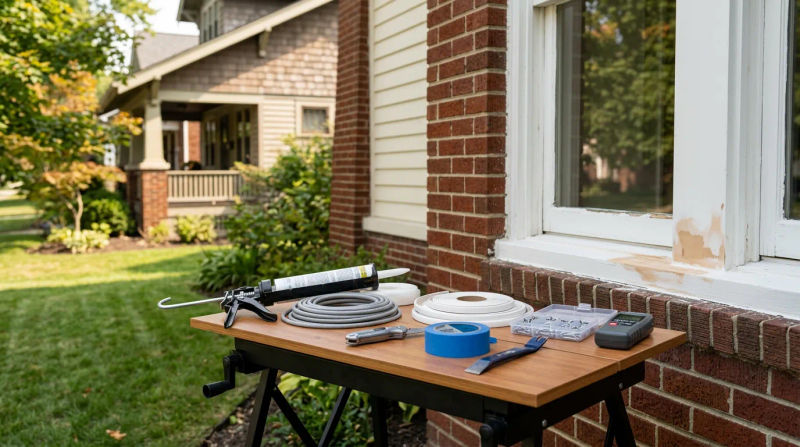
As a project superintendent with over a decade of experience on job sites across Columbus, I know that when homeowners start thinking about fall maintenance, one question comes first: "What is this going to cost?" It's a fair question, and getting a straight answer can be frustrating. My goal here is to give you a transparent, no-nonsense guide to budgeting for exterior window caulking and door weatherstripping, so you can protect your home from the coming winter without any financial surprises.
Prepping your home for the cold isn't just about comfort; it's about preventing costly moisture damage and saving on energy bills. Those small gaps around your windows and doors might seem minor now, but once Central Ohio’s windy, damp fall weather arrives, they become major entry points for cold air and moisture. Let's break down the realistic costs and what drives them.
Average Costs in Columbus
When you request a fall home weatherization estimate, the price will depend on the specific services you need. For most homeowners in the Columbus area, the focus is on sealing windows and doors. Here are some realistic price ranges you can expect from a professional, insured contractor.
- Professional Window Caulking: The window caulking cost typically ranges from $50 to $150 per window. This involves removing old, failed caulk, cleaning the surface, and applying a new, high-quality sealant. A small, ground-floor window will be on the lower end, while a large, second-story window requiring ladder work will be on the higher end.
- Exterior Door Weatherstripping: The exterior door weatherstripping cost Columbus homeowners can expect is usually between $100 and $250 per door. This includes removing the old, compressed seals from the door jamb and threshold, cleaning the channels, and installing new, durable weatherstripping to create a tight seal.
- Minimum Project Fees: It's important to know that most professional construction companies have a minimum service fee for a project, often ranging from $300 to $500. This covers the cost of mobilizing a trained crew, equipment, and insurance for even a small job. This is why it’s often more cost-effective to bundle several tasks into one visit rather than calling for a single window repair.
Factors That Affect Price
The price ranges above are a good starting point, but the final quote can be influenced by several factors. On every job site, our technicians assess these variables to provide an accurate price. Understanding them will help you evaluate any estimate you receive.
- Scope and Scale: The most obvious factor is volume. Sealing 20 windows will cost more than sealing five. However, the per-unit cost often decreases with a larger project, as the crew is already on-site and working efficiently.
- Accessibility: A single-story ranch home with easily accessible windows will have a lower labor cost than a two-story home that requires our crews to use tall ladders or specialized lifts. Safety precautions and the extra time needed for setup on higher stories will increase the overall air leak sealing around windows price.
- Condition and Prep Work: This is a big one. If the existing caulk is old, brittle, and baked-on, it requires significant labor to scrape and remove it properly. Simply caulking over the old material is a recipe for failure. If we discover soft or rotted wood trim around a window or door frame during our inspection, it must be repaired or replaced before new sealant can be applied. This necessary repair will add to the project cost but is critical for a lasting solution.
- Building Era and Style: The age and architectural style of your home play a role. For instance, many homes in Columbus suburbs like Dublin were built in the 1990s and 2000s. These neo-eclectic homes often feature complex window arrangements, bay windows, and mixed materials like brick, stone, and siding on the same wall. Each material transition requires a specific type of sealant and application technique, which demands more skill and time from the crew compared to a simple vinyl-sided home.
- Quality of Materials: You can buy a cheap tube of acrylic latex caulk for a few dollars, but it may crack and fail within a year or two. Our professional crews use commercial-grade elastomeric or polyurethane sealants. These materials cost more upfront but remain flexible through extreme temperature changes, adhere better to various surfaces, and can last for 10 years or more. The material cost is a small part of the total price, but investing in quality here prevents you from having to do the job all over again in the near future.
How to Get the Best Value
Getting the best value isn’t about finding the cheapest price; it's about getting a durable, high-quality result that you won’t have to worry about for years. Here are a few tips from my experience in the field.
- Act in the Early Fall: September and October are the ideal months for this work in Ohio. The weather is typically mild and dry, which is perfect for the sealant to cure properly. Waiting until November risks cold, damp conditions that can compromise adhesion. Plus, you’ll get the work done before you start losing expensive heated air through the gaps.
- Bundle Your Projects: Since contractors have minimum fees, it’s smart to address all your weatherization needs at once. Have all your windows inspected and sealed, and get all your exterior doors done at the same time. This maximizes the efficiency of the crew and gives you a better return on your investment.
- Understand the Estimate: A quality contractor will provide a detailed, itemized estimate that breaks down the costs for labor and materials. At our company, we believe this transparency is crucial. It allows you to see exactly what you're paying for and helps you compare a professional job against the true costs of a DIY attempt (materials, tools, and your own valuable time).
- Prioritize Problem Areas: If your budget is tight, focus on the most critical areas first. This is usually the side of the house that faces the prevailing winds or gets the most direct rain. Sealing these vulnerable spots first will give you the biggest immediate improvement in comfort and protection.
Questions to Ask Your Contractor
Before you hire anyone, you should feel confident in their expertise and process. A true professional will be happy to answer your questions. Here are a few I recommend asking:
- What specific type of sealant do you recommend for my home's siding/brick/trim, and why?
- What is your process for removing the old caulk and preparing the surface?
- Is the removal of old material included in the quoted price?
- How do you handle unforeseen issues, like discovering rotted wood?
- Can you provide proof of insurance and any warranties on your work?
Their answers will tell you a lot about their knowledge and commitment to quality. A contractor who emphasizes thorough preparation and uses high-quality materials is one who cares about the long-term performance of their work.
Protecting your home's exterior is one of the smartest investments you can make before winter sets in. It improves your family's comfort, reduces energy consumption, and prevents small gaps from turning into major moisture problems. By understanding the costs and what defines a quality job, you can make a confident, informed decision for your home.
For a personalized and detailed fall home weatherization estimate in the Columbus area, contact Blacklight Construction & Landscape Llc for a free consultation. We're happy to walk your property and provide a clear, itemized plan.