

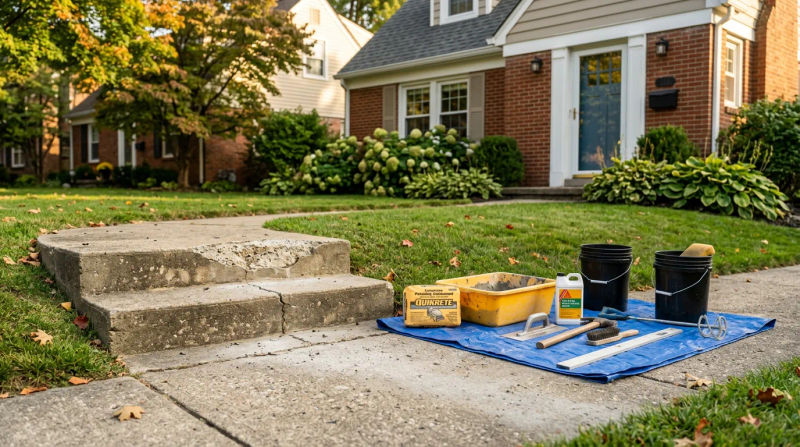
As a project superintendent, one of the first questions homeowners ask me is, “What’s this going to cost?” It’s a completely fair question. When you see cracks in your front steps or an uneven sidewalk slab, your mind immediately jumps to the budget. The goal of this guide is to give you a transparent look at concrete repair costs here in Columbus, OH, so you can plan effectively, especially with winter on the way.
Fall is the critical season for concrete assessment. The frequent rain we get in Columbus, followed by those early cold snaps, creates a perfect storm for damage. Water seeps into existing cracks, and when it freezes overnight, it expands with incredible force. This freeze-thaw cycle is the primary culprit behind spalling, widening cracks, and creating serious trip hazards. Addressing these issues now, before the ground freezes solid, is the most cost-effective approach.
Average Costs in Columbus
Let's break down some realistic price ranges. Please keep in mind these are estimates. The final price depends on the specific factors of your project, which we'll cover in the next section. When budgeting for concrete sidewalk repair cost Columbus OH, these figures provide a solid starting point.
- Minor Crack Sealing: For small, non-structural cracks (less than 1/4 inch wide), you can expect to pay $300 - $800. This involves cleaning the crack and filling it with a professional-grade, flexible sealant to prevent water intrusion. This is a preventative measure to stop the freeze-thaw cycle from causing more significant damage.
- Concrete Resurfacing or Patching: If you have surface-level damage like spalling or shallow pitting, but the underlying slab is still sound, resurfacing is an option. This typically costs $5 - $10 per square foot. Our technicians would grind down the damaged surface and apply a new polymer-modified concrete overlay.
- Concrete Step Repair: For a single damaged step, a repair involving patching and resurfacing might cost $400 - $900. However, if the damage is structural, replacement is the only safe option. Replacing a single concrete step usually starts around $600 - $1,200, as it involves demolition, forming, and pouring new concrete.
- Full Front Porch Step Replacement: For a complete tear-out and replacement of a small set of 3-4 steps, a front porch step replacement estimate would typically fall between $2,500 and $6,000. Larger, more complex staircases with landings or intricate railings can exceed $8,000 or more. This is a common project for homes built in the 1990s and 2000s, where builder-grade front steps are now reaching the end of their lifespan.
- Sidewalk Section Replacement: Replacing a single 4'x4' or 5'x5' sidewalk panel that has heaved or cracked beyond repair generally costs $600 - $1,500. This includes demolition of the old slab, hauling it away, preparing the base, and pouring the new section.
Factors That Affect Price
From my experience on job sites across the Columbus area, no two projects are identical. The price ranges above can shift based on several key variables. An organized crew can work efficiently, but these factors fundamentally define the scope of work.
- Scope and Severity of Damage: This is the biggest driver. A simple surface patch is vastly different from a full demolition and replacement. We always assess if the issue is cosmetic or structural. A structural failure, like a sinking or severely cracked foundation for the steps, requires a much more intensive and costly repair.
- Site Accessibility: Can our equipment get close to the work area? A front sidewalk with direct street access is easier and therefore less costly to work on than a backyard patio that requires our crews to use wheelbarrows and manual labor to transport materials and debris.
- Demolition and Debris Removal: Breaking up and hauling away old, heavy concrete is labor-intensive. The cost is influenced by the thickness of the concrete and whether it contains rebar reinforcement. This is a line item you should always see on a detailed estimate.
- Sub-base Preparation: This is where quality really counts. Simply pouring new concrete over poorly compacted soil is a recipe for failure. Many homes I see in areas like Pataskala, built during the boom of the late 90s and early 2000s, sometimes suffer from inadequately prepared sub-bases. We often need to excavate poor soil and install a new, compacted gravel base to ensure proper drainage and prevent future heaving or sinking. This extra step adds cost upfront but saves you from redoing the work in a few years.
- Materials and Finish: The standard 4000 PSI concrete mix is suitable for most residential applications. However, using higher-strength mixes, adding fiber mesh for reinforcement, or applying decorative finishes like stamped patterns or colors will increase the material cost. A standard broom finish is the most cost-effective and provides good traction.
- Permits and Inspections: For work on public sidewalks (the portion in the public right-of-way) or large structural changes, a permit from the city may be required. This involves fees and potential inspections, which will be factored into the overall cost.
How to Get the Best Value
Getting the best value doesn't always mean picking the lowest price. It means investing in a durable repair that solves the problem for the long term. Here are some practical tips.
- Act on Problems Early: That hairline crack you see this fall is an open invitation for water. Addressing it now is a simple fix. The freeze-thaw concrete crack repair pricing for a small job is minimal compared to the cost of replacing an entire section of concrete that has been destroyed by ice expansion over a winter or two.
- Bundle Your Projects: If you have a cracked step and a sinking sidewalk panel, have them repaired at the same time. Our crews are already mobilized to your site with equipment and materials. Combining jobs saves on setup and delivery costs, reducing the overall price compared to tackling them as two separate projects.
- Prioritize Sub-Base Preparation: When comparing estimates, ask specifically about the sub-base. A contractor who plans to just pour concrete on top of existing dirt is offering a cheaper, but temporary, solution. A quality job includes a properly graded and compacted aggregate base. This is the foundation of a long-lasting repair.
- Schedule During the Shoulder Season: Fall is an ideal time to get a site visit and a written estimate. You can lock in scheduling before the first deep freeze. This allows you to budget and get the work done without competing with the spring rush when everyone is trying to fix the damage winter left behind.
Questions to Ask Your Contractor
To ensure you're hiring a professional who will do the job right, here are a few questions I recommend every homeowner ask:
- How will you prepare the sub-base beneath the new concrete?
- Does your estimate include all costs for demolition, material, labor, and debris removal?
- What strength of concrete (PSI) do you use for steps and sidewalks?
- Are your crews insured, and are you licensed to work in Columbus?
- What is the estimated timeline for my project, from start to finish?
- How do you protect my lawn, landscaping, and home during the construction process?
Asking these questions helps you gauge a contractor's expertise and commitment to quality. A reputable professional will have clear, confident answers.
Taking care of your home’s concrete is about more than just curb appeal; it’s about safety and protecting your property’s value. By understanding the costs and the factors that influence them, you can make a smart, informed decision. Acting now, before the harsh Columbus winter sets in, will save you headaches and money down the road.
For a personalized concrete step repair estimate in the Columbus area, contact Blacklight Construction & Landscape Llc for a free consultation. We’re happy to come out, assess the situation, and provide a detailed plan and quote.