
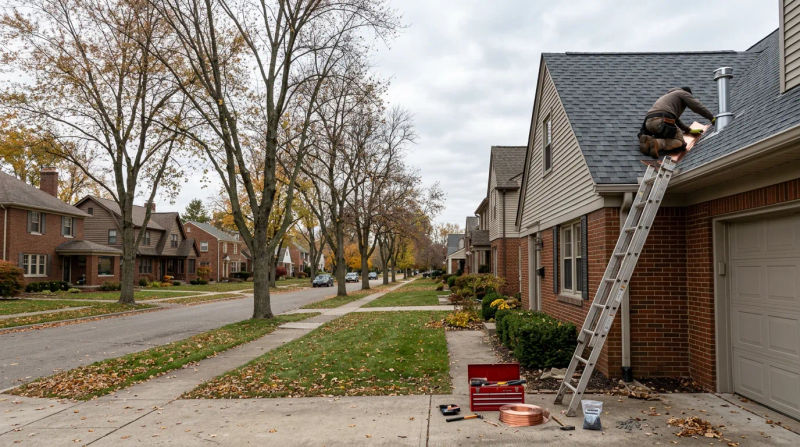
As a Construction & Landscape Project Superintendent with Blacklight Construction & Landscape LLC, I’ve spent more than a decade on jobsites all over the Columbus area. I’ve seen firsthand how our unique Central Ohio weather patterns can turn a small, unnoticed roofing issue into a major headache for homeowners. With the crisp autumn air settling in and the first frost just around the corner, now is the most critical time of year to assess your roof's health. The temperature swings we experience can cause sealants to contract and expand, creating vulnerabilities that weren't there during the summer. Proactive maintenance today is the key to preventing a costly roof leak repair before winter Ohio sets in for good.
Columbus Weather Challenges
Living in Columbus means dealing with a full spectrum of weather, and our roofs bear the brunt of it. It’s not just one single event, but a combination of factors that wears down roofing materials over time. The most significant challenge we face is the freeze-thaw cycle. Water seeps into tiny cracks in shingles or gaps in flashing, then freezes and expands overnight. This expansion widens the crack. The next day, it thaws, allowing more water in for the next freeze. This relentless cycle can pry apart shingles, push out nails, and compromise the most resilient materials.
Another major factor is wind. Fall and winter storms can bring powerful gusts that get underneath the edge of shingles, causing them to lift, bend, or tear off entirely. At Blacklight Construction & Landscape Llc, we see this often in Columbus, especially on roofs with a steeper pitch or those in more open, exposed areas. This kind of damage, known as wind-lifted shingle repair Columbus, is one of our most common pre-winter service calls. A single lifted shingle can expose the underlayment and decking, creating a direct path for water to enter your attic and home.
Finally, the weight of wet, heavy snow and the formation of ice dams pose a serious threat. If gutters are clogged with autumn leaves, melting snow has nowhere to go. It backs up onto the roof, refreezing along the eaves and creating a solid dam of ice. This dam traps water behind it, forcing it up and under the shingles, leading to significant leaks and potential structural damage to the roof deck and interior walls.
Best Practices for Local Homeowners
Understanding these challenges is the first step; taking action is the next. A thorough visual inspection from the ground can reveal obvious problems, but a professional assessment is crucial for spotting subtle issues. Here’s a checklist of what our trained crews look for during an inspection, tailored for Columbus homes.
- Examine Your Flashing: Flashing is the metal material installed around chimneys, vents, skylights, and in the valleys where roof planes meet. It’s designed to direct water away from these vulnerable penetration points. Over time, the sealant around flashing can dry out and crack, or the metal itself can be bent or dislodged by wind. This is a primary source of leaks. A proper roof flashing repair Columbus OH involves removing the old, failed sealant, cleaning the area, and applying a new, high-grade, flexible sealant that can withstand our temperature swings. In neighborhoods like Westerville, we see many homes built in the 1970s with two-story Colonial Revival designs. These homes often feature multiple gables and complex rooflines, which means more flashing and a greater number of potential failure points that require careful inspection.
- Look for Damaged Shingles: Scan your roof for shingles that are curling at the edges, cracked, or missing altogether. Also, check your gutters for an excessive amount of asphalt granules. These granules protect the shingle from UV rays, and their loss is a sign that the shingles are nearing the end of their lifespan and becoming brittle. Addressing a few damaged shingles now is a simple fix that prevents water from reaching the underlayment.
- Check for Exposed Fasteners: