
The crisp autumn air has arrived in Pataskala, and as the leaves begin to turn and fall, the true structure of the trees on your property is revealed. It’s a beautiful time of year, but it’s also a critical window for assessing tree health. You might be looking out your window at a large, mature tree that has stood for decades, now bare against the sky, and wondering: is it ready to handle the ice, snow, and high winds of an Ohio winter? This is a question our teams hear frequently, as homeowners become more aware of the potential risks that unhealthy trees pose to their homes and families.
As someone who has spent over a decade on jobsites across the Columbus area, I’ve seen firsthand the damage a falling tree or limb can cause. Proactive assessment is the single most effective tool you have to prevent a winter catastrophe. Now that branches are exposed, it's the perfect time to take a walk around your yard and look for common tree removal signs.
Common Signs and Symptoms
Knowing how to tell if a tree is dangerous in Pataskala starts with careful observation. Many of the most serious warning signs are visible long before a tree fails. Here are seven key indicators that a tree may be hazardous and require professional evaluation.
- A Significant or Sudden Lean
A tree that has always had a slight lean may not be a concern. However, if you notice a sudden change in its angle or a lean greater than 15 degrees from vertical, it’s a major red flag. This often points to root failure or compromised soil stability. Look for leaning tree root heave warning signs at the base, such as cracked or mounded soil on the side opposite the lean. This indicates the root plate is pulling up from the ground and the tree is losing its anchor.
- Large Dead Limbs or Branches
This is one of the most common and urgent hazards. If you have dead limbs over your house, what to do is simple: call for a professional assessment immediately. Deadwood is brittle, unpredictable, and can break off at any time, especially under the weight of ice or snow. You can identify dead branches easily in the fall - they will be bare while others may still have a few clinging leaves, they often lack bark, and they appear dry and cracked.
- Deep Cracks or Splits in the Trunk
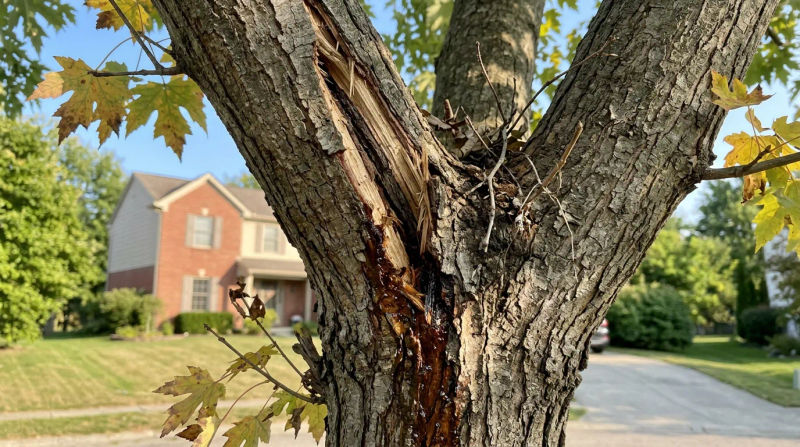
Vertical cracks in the trunk are serious defects that compromise a tree's structural integrity. There are several types to watch for:
- Vertical Cracks: Can be caused by lightning, frost, or internal decay.
- Co-dominant Stems: These are “V-shaped” unions where two large stems grow together. They are inherently weak and prone to splitting apart, especially during storms.
- Included Bark: When bark gets trapped within a V-shaped union, it prevents the wood from fusing properly, creating a very weak point.
- Hollows, Cavities, or Cankers
A hollow trunk doesn't automatically mean a tree must be removed, but the size and location of the cavity are critical. If more than one-third of the trunk's interior is hollow or decayed, its strength is significantly reduced. Cankers, which are sunken areas of dead bark on the trunk or branches, are another sign that the tree is fighting off a disease or fungus that is killing its tissue.
- Fungus or Mushroom Growth
While some fungi are harmless, the appearance of mushrooms or fungal conks on the trunk, at the base of the tree, or on major roots is often an external sign of extensive internal decay. The fungus feeds on rotting wood, and by the time you see it, the decay process is usually well-advanced.
- Root System Damage
A tree’s stability is only as good as its root system. Construction activity, such as digging a foundation, trenching for utilities, or even soil compaction from heavy equipment, can sever or damage critical roots. Signs of root damage can take years to appear but often include dieback in the canopy, leaning, and poor overall health.
- Unseasonal Leaf Drop or Discoloration
If your tree shed its leaves weeks before others of the same species or if the leaves were discolored or stunted during the summer, it's a sign of stress. This could be caused by disease, pests, nutrient deficiency, or root problems. While the leaves are gone now, it’s a symptom to remember from the summer months as you assess the tree's overall condition.
What Causes This Problem
Hazardous trees are rarely the result of a single event. More often, it’s a combination of factors that accumulate over time. The mature trees found on many Pataskala properties, especially those in developments from the 1990s and 2000s, are now reaching an age where these issues become more prominent.
- Disease and Pests: Invasive species like the Emerald Ash Borer have devastated ash populations, while fungal diseases like oak wilt and anthracnose can weaken even the strongest trees from the inside out.
- Storm Damage: High winds and ice storms can cause visible breaks, but they can also create small stress fractures in the wood that worsen over subsequent seasons, leading to a sudden failure years later.
- Poor Pruning or Growth Habits: Improper pruning can create wounds that don't heal, allowing decay to enter. Similarly, trees with inherent structural defects like co-dominant stems become more dangerous as they grow larger and heavier.
- Environmental Stress: Factors like soil compaction, drought, or an oversaturated root zone can weaken a tree's natural defenses, making it more susceptible to all the issues listed above.
When to Call a Professional
While identifying potential problems is something a homeowner can do, diagnosing the severity of the risk and taking action requires expertise. Our trained crews follow standardized processes to evaluate and, if necessary, remove hazardous trees safely and efficiently.
Attempting to remove a large tree or even a significant limb on your own is extremely dangerous. You should call an experienced professional if:
- The tree is leaning toward a house, garage, power lines, or play area.
- The work requires a ladder or climbing.
- The limbs in question are larger than a few inches in diameter.
- You need to use a chainsaw above ground level.
- The tree is located near a complex, multi-gabled roofline, like those common on homes built in the 1990s and 2000s, where a falling limb could cause extensive and costly damage.
A qualified professional can provide a thorough risk assessment. They have the knowledge to determine if a tree can be saved through pruning or cabling, or if removal is the only safe option. They also have the specialized equipment and insurance to perform the work without endangering your property or our technicians.
Conclusion
Your home is your most valuable asset, and the beautiful, mature trees on your property contribute to its value and appeal. However, their health and stability should never be taken for granted. This autumn, as the leaves fall, take the opportunity to look closely at your trees for the warning signs we’ve discussed. Pay special attention to leaning, deadwood, and cracks in the trunk. Addressing a potential problem now is far safer and less expensive than dealing with the aftermath of a tree falling during a winter storm.
Don't wait for heavy ice and wind to test the strength of your trees. Being proactive is the best defense against property damage and personal injury. If you notice any of these signs, contact a local professional for an inspection.